




You reach into your bag for your keys and a nail catches on the lining. Or you glance down and the tip has separated into thin layers again, for the third time this week. Now there’s a rough edge snagging every sweater you own.
If that sounds familiar, you have plenty of company. Nail fragility affects up to about 1 in 5 people, according to a dermatology review on brittle nails, and it shows up most often in women over 50. Most people who get their brittle nails checked out don’t turn out to have an underlying condition behind them.
That’s good news, because the changes that help most start with what your hands go through every day. The first step in learning how to strengthen nails is figuring out which kind of weak nails you have, since dry nails and soft nails need different fixes.
Why Nails Get Weak, Peel, or Split
Your nails are made of keratin, the same protein found in your hair. It forms in thin sheets that stack together into the hard nail plate you see. When those sheets stop holding together, the nail starts to peel, split, or break.
Moisture matters here. Some researchers have linked brittle nails to low water content in the nail, though other studies found no meaningful difference between brittle and healthy nails. Day to day, weak nails usually look like one of two patterns:
-
Dry and brittle: they snap, split, or peel at the tip, and feel stiff.
-
Soft and bendy: they fold over or tear before they break, and feel thin and flexible.
Where the damage shows up tells you something too. Peeling in flat layers at the tip has a clinical name, onychoschizia. Splits that run lengthwise from the tip back toward the cuticle are called onychorrhexis.
Repeated wetting and drying is one of the most common triggers. Dermatologists see layered peeling most in people who wash their hands constantly. Dishes, cleaning products, acetone polish remover, and taking off gel or acrylic manicures all add wear on top of that.
Age shifts things too. Nails hold a small amount of natural fat, about 5 percent, and one of those lipids drops off as you get older, especially after menopause.
Before you change anything, take a close look at your nails. Are they snapping or bending? Is it every nail, or the ones you use most? Did it start after a gel set or a stretch of winter? Your answers tell you whether to start with moisture, a break from gel, or a conversation with your doctor.
Daily Habits That Strengthen Nails
1) Cut Down on Water Exposure
Washing dishes, scrubbing the tub, and washing your hands twenty times a day all put your nails through the same wet-dry routine. Over weeks, that cycle works the layers apart until the tip flakes.
Wear gloves for dishes and cleaning, and when you color your hair, too. A pair of cotton gloves under vinyl or rubber ones, or rubber gloves with a cotton lining, keeps your hands dry inside. Keep baths and soaks on the shorter side, dry your hands all the way after washing, and moisturize right after.
2) Moisturize Your Nails Along With Your Hands
When you put on hand cream, rub some into each nail plate and around the cuticle as well. Doing this after every wash adds up, especially in colder months when your skin dries out faster.
Thicker, ointment-style products help most here. Petrolatum (like Vaseline) and lanolin are occlusives, which means they sit on top and hold moisture in. For an overnight boost, put a layer on your nails before bed and sleep in cotton gloves.
Cuticle oil is another easy add. Look for jojoba, sweet almond, or vitamin E, and massage a drop into each cuticle while you watch TV or before you fall asleep.
3) Trim, File, and Shape Gently
Clip your nails after a shower or bath, when softer nails are less likely to crack under the clippers. Cut straight across with a slight curve at the corners. A lot of people find a squoval shape, square with rounded edges, holds up better than a pointed tip.
File in one direction, with no sawing back and forth. Many people prefer a fine-grit or glass file because it feels gentler. Skip buffing ridges off the top of the nail, since that thins the plate you’re trying to protect. While your nails are weak, keeping them short leaves less length to catch and tear.
4) Leave Your Cuticles Alone
Your cuticle seals the spot where skin meets nail. Underneath it sits the matrix, the tissue that makes new nail. Cutting or picking at the cuticle can injure the matrix, and that damage can show up later as white marks in the new nail.
After a shower, you can gently push your cuticles back with a soft towel. Leave the clippers out of it, and ask your salon to keep cuticles intact during a manicure.
5) Stop Using Your Nails as Tools
Popping open a can, peeling off a label, or scraping gum off a counter can bend or tear the tip of a nail that’s already fragile. Reach for a coin, a key, or a pair of scissors instead.
Nail biting and picking at the edges wear down the tip and the skin around it. If it’s a stress habit, short nails filed smooth give you less to grab onto.
Nail Strengtheners and What to Put on Your Nails
“Nail strengthener” covers a wide range of products. Some are hardeners, which make the nail stiffer. Others work more like a treatment basecoat, with ingredients such as keratin, hydrolyzed proteins, or peptides on the label. Checking the ingredient list tells you which kind you’re holding.
Hardeners made with formaldehyde, sometimes listed as formalin, deserve a closer look. With repeated use, the nail can lose its flexibility and turn more brittle than when you started. Formaldehyde can also irritate the skin around the nail, and some people have seen the nail lift away from the skin underneath.
So what can you put on nails to harden them? If yours are soft and bendy, a hardener is the better match. If they’re dry and snapping, adding stiffness probably won’t help, and moisture is the smarter first step.
If you try a hardener, use it for a few weeks, take a break, and stop if your nails feel drier or start lifting.
Polish itself is fine for most people. Taking a week or two off between manicures gives you a chance to see your bare nails and moisturize them directly.
Remover is where many nails take a hit. Acetone is drying, so Mayo Clinic recommends an acetone-free nail polish remover for regular polish. Gel and dip powder need acetone to come off, so keep those removals as rare as possible and moisturize right after.
How to Strengthen Nails After Gel or Acrylics
A gel manicure or a set of acrylics can look great for two weeks, then leave your natural nails thin and tender. Prepping the nail usually involves filing or buffing the surface. Removal adds acetone soaks, and sometimes scraping or peeling.
According to the American Academy of Dermatology, artificial nails can leave the nails underneath thinner, drier, and more brittle. In one small case report, five people found their nails noticeably thinner and weaker after gel manicures that were removed with acetone and peeling. You might notice nails that feel thin and bendy, chalky white patches, or layers peeling at the tip.
Here’s how to help your nails recover:
-
Never peel or pick gel off. Soak and gently push it away, or have a salon remove it.
-
Keep your nails short while the damaged part grows out.
-
Moisturize two to three times a day, with a thicker occlusive at night.
-
Use a strengthening basecoat while you grow them out, or a hardener for a short stretch if they’re soft.
-
Leave a few weeks between sets when you can.
The damaged section won’t repair itself. It gets replaced as healthy nail grows in from the base, and a fingernail takes several months to grow out completely.
If you get gel manicures often, keep UV exposure in mind too. Dermatologists note that repeated gel manicures can raise the risk of skin cancer and early skin aging on the hands, because the polish is cured under UV light. Broad-spectrum sunscreen on your hands or dark fingerless gloves is an easy precaution.
Nutrition and Vitamins for Strong Nails
When your nails keep splitting, it’s tempting to head straight for the hair, skin, and nails aisle. Severe nutrient deficiencies can make nails fragile, but they’re the less common explanation.
That makes the habits above your first move. A balanced diet comes next, and supplements work best as a backup when your diet falls short.
1) Biotin for Nails
Biotin is the vitamin most people think of first for nails. The research is limited, though. Only three small studies have looked at biotin for brittle nails, according to a Weill Cornell nail specialist, and none of them used a placebo group.
In one of them, people took 2.5 mg a day for an average of about five and a half months, and 41 of the 45 people who were evaluated ended up with firmer, harder nails. That 2.5 mg is the amount used in the study, not a dose recommendation. Larger, controlled trials are still missing.
You can get biotin from food, too. Eggs, salmon, sweet potato, and almonds are all sources.
One important note: high biotin intake can throw off certain lab results, including thyroid and other hormone tests. The FDA has warned about biotin interference with lab tests and reported a death linked to a falsely low result on a heart test called troponin. If you take biotin, tell your doctor and the lab, and ask whether you should pause it before bloodwork.
2) Collagen
Collagen has a small study behind it, too. In one trial, 25 women ages 18 to 50 with brittle nails took 2.5 g a day of a specific type of collagen peptide for 24 weeks. By the end, nail growth rose about 12 percent and broken nails dropped about 42 percent.
Keep the limits in mind. Everyone knew what they were taking, and there was no placebo group, so the results still need confirming. If you’re weighing the two, our breakdown of biotin vs collagen walks through how each one works.
3) Iron and Zinc
Low iron can leave nails brittle, and in more severe cases it can make them curve up at the edges like a spoon. Low zinc has also been linked to fragile nails.
Those small white spots on your nails usually trace back to minor bumps or injury near the base of the nail, the same kind of damage rough cuticle care can cause. Low zinc is a less likely explanation.
If you’re wondering which nutrients you might be low on, iron and zinc are the two minerals most tied to fragile nails. A blood test is the only way to know for sure, so ask your doctor before you start guessing with supplements.
Hair, Skin, and Nails Supplements
Most hair, skin, and nails formulas combine biotin with other B vitamins and vitamin C. These are targeted formulas, built around a few nutrients, while a multivitamin covers a wider spread at lower amounts. If you’re unsure which you need, here’s how supplements and multivitamins differ.

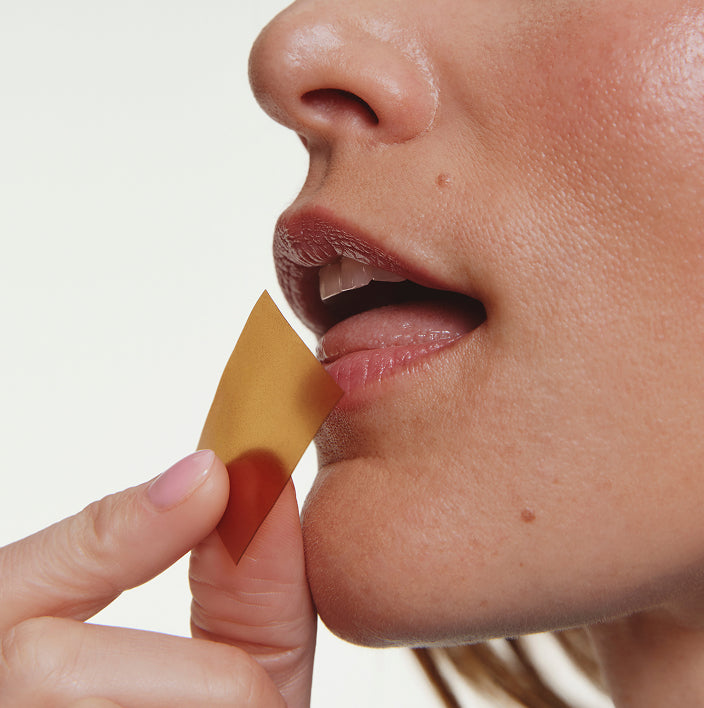
Our Hair, Skin & Nails* Quick Melt Strips are made to support healthy hair, skin, and nails* with biotin, folic acid, and vitamin D3. Each raspberry-flavored strip dissolves on your tongue with no water needed, which helps if pills aren’t your thing. They’re part of our larger Quick Melt Strips lineup, and you’ll find them with the rest of our hair, skin, and nails picks.

Good to Glow™ pairs biotin with vitamin C and is formulated with your skin in mind. If you’re thinking about your hair as well, the Glow & Grow Bundle combines it with our Healthy Hair Probiotics®.
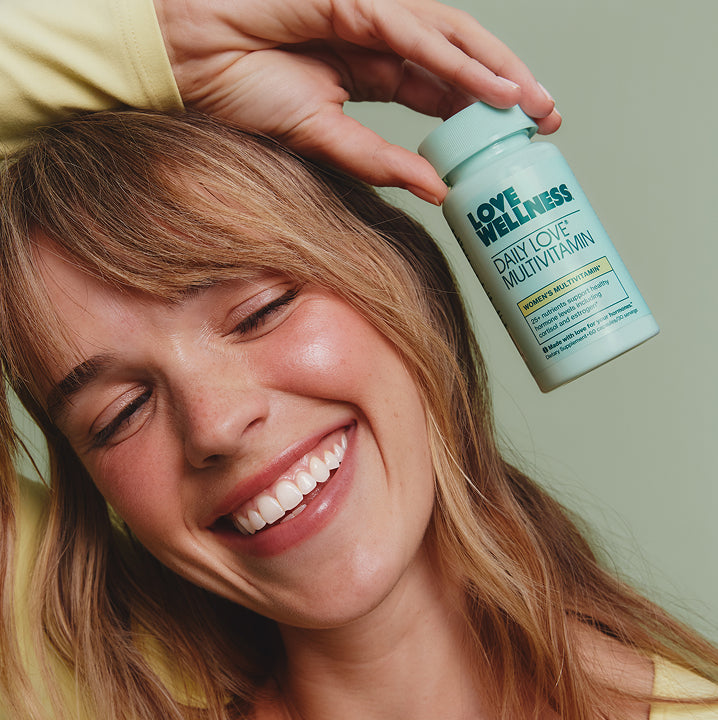
For broader day-to-day coverage, Daily Love® Multivitamin offers 25+ nutrients and is built to help fill common diet gaps.* It sits with the rest of our nutrition and hydration picks.
Several of our formulas contain biotin, so the same advice applies to them. Check in with your doctor before adding one, and let your doctor and the lab know you take it before any bloodwork.
How Long It Takes to See Stronger Nails
Nails grow slowly. In one study of healthy young adults, fingernails grew an average of about 3.5 mm a month, while toenails grew less than half as fast. At that pace, a fingernail needs several months to grow out from base to tip.
That’s why timing looks different depending on what you change. Gloves, moisturizer, and gentler filing help the nail you already have, so you’ll often feel fewer snags sooner. Anything you eat or take shows up only in nail that hasn’t grown in yet.
Nails that stop breaking get to keep their length, which is often what people are after when they want faster growth. If longer nails are your real goal, protecting the length you already have is the most dependable place to start. For more on length, see our guide on how to make your nails grow faster.
To track progress, photograph your nails once a month in the same light and watch the smoother new nail move up from the base.
When Weak Nails Signal Something Else
Most brittle nails don’t point to a bigger health issue, but some nail changes are worth showing a doctor or board-certified dermatologist:
-
Brittle, thin, slow-growing nails along with tiredness or always feeling cold. Low thyroid affects the nails in most people who have it.
-
Nails that curve up like a spoon, which can point to low iron.
-
Small pits or dents in the nail surface, which can come with psoriasis.
-
Nails that turn yellow or crumble, which can mean a fungal infection.
-
Deep vertical ridges or splits. Ridging becomes more common with age, and a dermatologist can tell you whether yours need attention.
Any nail change you can’t explain, or one that keeps getting worse, should get checked too.
Which Fix Your Nails Need First
If your nails are dry and snapping, start with gloves for wet work, hand cream rubbed into the nails, an occlusive at night, and acetone-free remover. If they’re soft and bendy, cut back on water exposure and consider a hardener for a few weeks at a time.
Coming off gel or acrylics? Keep them short, moisturize several times a day, and leave breaks between sets. If you’d like support from within as well, our hair, skin, and nails formulas can be part of that routine. Give any supplement a few months, and tell your doctor about biotin before bloodwork.
Once the snagging stops, you’ll notice it in the little things, like pulling on a sweater or digging for your keys without a second thought.
*