




You know the feeling. Your jeans button fine most of the month, then a few days before your period they suddenly don’t, and your stomach feels tight and puffy for no reason you ate your way into. If that’s you most months, you’re in good company.
In one survey, around 73% of women and people with periods reported gastrointestinal symptoms like bloating, abdominal pain, or diarrhea during their cycle.
The good news is that period bloating is temporary and very manageable. Understanding what’s driving it makes the difference between feeling at the mercy of your cycle and having a few reliable habits that help. If you already keep bloating relief products in your routine, this is the context that helps you use them well.
What Period Bloating Actually Is
Period bloating is a temporary, cyclical symptom, not a single condition. It usually shows up in the late luteal phase, the days before bleeding starts, and often overlaps the first day or two of your period.
It helps to know there are two different things happening, because they respond to different remedies.
The first is water-retention bloat. Hormone shifts prompt your body to hold onto fluid and sodium, which creates that tight, swollen, puffy feeling. It can affect your belly, but also your breasts, hands, and feet.
The second is digestive bloat. Around your period, your gut slows down and gas builds up, which leads to abdominal fullness and gassiness. The two often happen at once, which is why the bloated feeling can be so persistent.
Keeping these two apart is the most useful thing you can do up front. The remedies later in this piece sort cleanly into one bucket or the other, and once you know which kind of bloat you tend to get, you’ll know where to put your energy.
Why Period Bloating Happens
Most of what you feel traces back to the hormonal cascade of the late luteal phase. Here’s how each piece maps to the two types of bloat.
1) Rising estrogen and fluid retention
Estrogen peaks in your cycle can prompt your kidneys to retain water and sodium. That retained fluid is the swelling and puffiness behind water-retention bloat.
This is also why the bloat isn’t limited to your stomach. The same fluid shifts can leave your breasts tender, your fingers a little swollen, and your rings or shoes feeling snug. It’s a whole-body retention pattern, not just a belly thing.
2) Falling progesterone and slowed digestion
After ovulation, progesterone rises and then drops sharply before your period. While it's elevated, progesterone relaxes smooth muscle throughout the body, including the muscle that moves food through your gut.
That slowdown is part of why digestion feels sluggish in the luteal phase, and the same hormonal shifts can prompt your body to hold onto sodium and water. Together they bring on the fullness, gas, and premenstrual constipation a lot of women notice. Research on luteal-phase digestion is still mixed on exactly how much transit slows, so this is best understood as a contributing pattern rather than a precise rule.
When digestion slows, food and gas spend more time in your system than usual. That extra transit time is a big part of why things feel backed up and heavy in the days right before your period.
3) Prostaglandins and gut irritation
When your period starts, your body releases prostaglandins to help the uterus contract. Those same compounds can irritate your digestive tract, which is why some people get gas or looser stools on day one.
It’s also why bloating often eases once bleeding begins. Those contractions help stimulate the bowel, so the digestive backup from the luteal phase starts to clear. If you’ve noticed your bloat peaks just before your period and then settles, this is why.
4) Cravings, salt, and carbs
A premenstrual dip in serotonin and rise in cortisol can drive cravings for salt and carbs. Salty foods make fluid retention worse. And when you store extra carbohydrate energy as glycogen, your body holds onto roughly three to four grams of water for every gram of glycogen, which adds to that puffy feeling.
The cravings are real, and so is their effect. This isn’t about willpower. The hormonal shift is steering your appetite, and the foods it steers you toward happen to be the ones that worsen both kinds of bloat.
How Long Period Bloating Lasts
For most people, period bloating runs from a few days before bleeding through the first two or three days of your period, then resolves on its own. There’s normal variation here. Some cycles bring more, some bring less, and your own pattern can shift over time with age, stress, and changes in your routine.
One thing worth watching: bloating that lasts well beyond one full cycle, or comes with severe pain, isn’t typical period bloating. That’s the signal to check in with a doctor, which we’ll come back to.
How to Reduce Period Bloating
Here’s where you have the most control. The habits below target the two mechanisms from earlier. Some work on fluid retention, others on digestion, and most help with both. Think of it as a system you ease into before your period, not a checklist you scramble through once you’re already uncomfortable.
1) Diet adjustments
What you eat in the days before your period has a real effect on how much you retain.
Cutting back on salty and heavily processed foods is the single most useful diet change, since sodium is a main driver of fluid retention. It helps to lean into potassium-rich foods like bananas, avocado, and sweet potato, which support healthy fluid balance.
Carbonated drinks and a lot of simple carbs can add to the puffy, gassy feeling, so easing off both in the late luteal phase tends to help. Fizzy drinks add gas directly, and simple carbs feed the glycogen-and-water cycle from earlier.
2) Potassium and magnesium
Two minerals are worth singling out, because both support the systems behind period bloating.
Potassium helps balance sodium, which is why potassium-rich foods can take some of the edge off fluid retention. Magnesium supports muscle relaxation and comfort during the premenstrual window, and you’ll find it in pumpkin seeds, almonds, and spinach.
Food is the best starting place for both. If you and your doctor decide your diet falls short, that’s the point at which a supplement can fill the gap, rather than as a first move.
3) Hydration and fluid balance
This one feels backwards, but drinking more water actually reduces retention rather than worsening it. When you’re well hydrated, your body has less reason to hold onto fluid, and it helps flush excess sodium and keep digestion steady.
Aim for steady water through the day, and let water-rich foods like cucumber, watermelon, and leafy greens do some of the work. If you tend to reach for sparkling water, still water is the gentler choice this week.
4) Movement
Light activity helps both circulation and digestion, which is exactly what a bloated body needs. A walk, some yoga or Pilates, or low-impact cycling all count.
You don’t need a punishing workout. Around 30 minutes during the PMS window is plenty, and the same movement that eases bloating can help with cramps too. The goal is gentle and consistent, not intense.
5) Gut and digestive support
Your gut does a lot of the heavy lifting here. The microbiome influences digestion, inflammation, and even fluid balance, so supporting it pays off across your whole cycle, not just your period.
There’s also a hormone angle. Your gut helps process and clear used hormones, including estrogen, so a well-supported gut is part of how your body keeps its hormone levels steady through the month. That’s the same gut-hormone link behind a lot of premenstrual symptoms, bloating included, and it’s why gut care tends to show up in conversations about cycle comfort.

Fiber is the foundation. It keeps things moving and feeds the good bacteria in your gut. A daily fiber supplement like Sparkle Fiber is one way to fill the gap many of us have in our diets, using soluble and insoluble fiber to support regularity.
Probiotics are another piece. Gut Feelings Probiotics is an example of a daily probiotic made to support microbiome balance over time. These are everyday-routine choices that support gut health generally, rather than quick fixes for an already-bloated belly.
6) Lifestyle factors
A few other habits move the needle. Caffeine and alcohol are both irritants, and alcohol is dehydrating, which can trigger rebound fluid retention. Easing off both before your period is a reasonable move.
Stress matters too. Higher cortisol can make bloating feel worse, so simple things like better sleep and a few minutes of intentional downtime can help. And a heating pad or warm bath relaxes the muscles and eases the pressure that comes with cramps and bloat.
7) Targeted bloat supplements
When diet and lifestyle aren’t quite enough, targeted debloating supplements are designed to support digestion and ease premenstrual heaviness. This category usually leans on ingredients like digestive enzymes, ginger, dandelion root, and fiber.

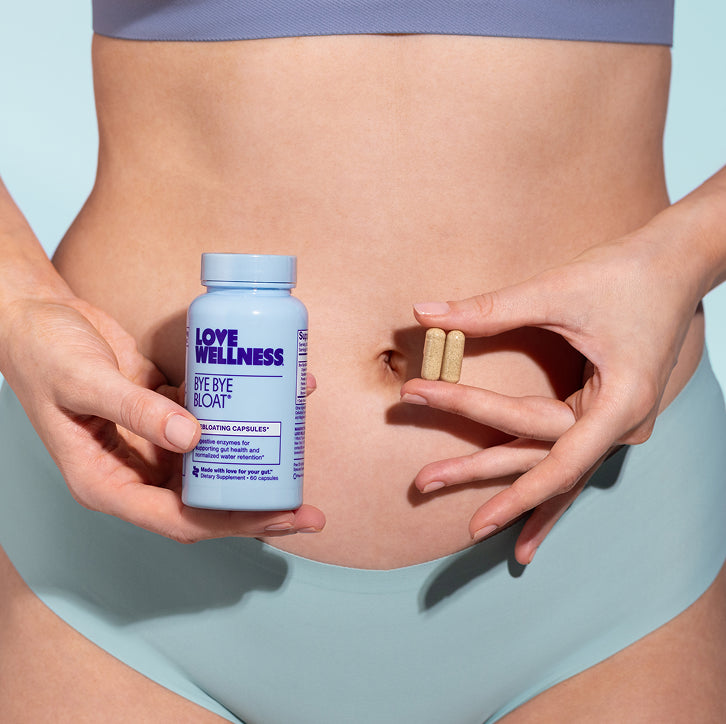
Bye Bye Bloat is a clinically studied example. It pairs digestive enzymes with organic botanicals like ginger and parsley leaf to support digestion and help normalize PMS-related digestive and water-weight symptoms. The point of the category is to support your body’s own digestion, not to override it, so think of these as a complement to the diet and hydration habits above.
When to See a Doctor
Most period bloating is uncomfortable but harmless. Some patterns deserve a closer look, and recognizing them is self-advocacy, not alarm.
Check in with a healthcare provider if you notice bloating that lasts beyond one full cycle, severe pain, sudden changes in your cycle, or worsening digestive symptoms.
A few conditions can mimic or intensify PMS bloating, including endometriosis, IBS, and PCOS. If your bloating feels out of step with your usual pattern, a doctor can help you sort out what’s going on and rule those out. You know your own body. A pattern that feels off is reason enough to ask.
Frequently Asked Questions
Can certain foods make period bloating worse?
Yes. Salt, sugar, heavily processed foods, and carbonated drinks are the usual culprits. Salt and simple carbs drive fluid retention, while carbonation and hard-to-digest foods add to digestive bloat. Easing off them in the days before your period can make a noticeable difference.
Is period bloating the same as pregnancy bloating?
Not quite. Period bloating tracks with your cycle and clears once your period is underway. Early pregnancy bloating tends to persist and usually comes with other signs, like a missed period or breast changes. Timing is the clearest tell. If you’re unsure, a test and a doctor’s visit will give you a real answer.
Does period bloating cause weight gain?
The number on the scale can tick up a pound or two, but that’s water weight, not fat. It comes from the fluid and glycogen your body holds onto in the late luteal phase, and it resolves on its own once your period passes and your hormones reset. You can read more about water weight if you want the full picture.
The Bottom Line
Period bloating comes down to two things your hormones are doing: holding onto fluid and slowing your digestion. Once you know which one you’re dealing with, the remedies make sense. Cut the salt and stay hydrated for fluid retention, support your gut and keep moving for digestion, and lean on targeted support when you need a little extra.
None of it requires a punishing protocol. A few steady habits in the week before your period are usually enough to help you feel more like yourself, at every stage of your cycle.
*