









Two days after you shaved, a patch of angry little bumps showed up along your bikini line. Now it stings or itches, and you might be wondering if it’s something worse. You’re in good company. Razor bumps and razor burn are two of the most common skin complaints there are.
Which one you have decides the fix, so we’ll sort that out first. Then we’ll calm the flare, free the trapped hairs, and rebuild a shave routine that stops the cycle. All of it fits inside a simple vulva skincare routine.
Razor Bumps vs. Razor Burn vs. Ingrown Hairs
Start with timing, because it tells you the most. Razor burn shows up within minutes to hours of shaving as diffuse redness, stinging, and a raw feeling across the shaved area. No trapped hair is involved. It’s surface irritation, and Cleveland Clinic notes that razor burn typically clears on its own.
Razor bumps arrive later, one to three days after shaving, as raised pimple-like papules or pus-filled pustules, each one centered on a hair follicle. The clinical name is pseudofolliculitis barbae. In the pubic area, some clinicians call it pseudofolliculitis pubis.
The cause: shaved hair, cut to a sharp tip, curls back or grows sideways into the skin, and your immune system reacts to it like a splinter. DermNet’s overview of how pseudofolliculitis develops explains why coarse, curly hair is most prone.
An ingrown pubic hair is the single-hair version, sometimes visible as a dark loop under the skin. Cleveland Clinic points out that ingrown pubic hairs can follow waxing, plucking, or friction, not only shaving.
Why here, of all places? Pubic hair is coarser and curlier than the hair on your legs, follicles sit at varied angles, and the whole area lives under snug fabric, sweat, and friction.
|
What you have |
When it appears |
What it looks like |
What that means for treatment |
|
Razor burn |
Minutes to hours after shaving |
Diffuse redness, stinging, raw patches |
Soothe the skin barrier and let it settle |
|
Razor bumps |
1 to 3 days after shaving |
Raised papules or pustules, each on a follicle |
Stop shaving, calm inflammation, free the hairs |
|
Ingrown hair |
Days after any hair removal |
A single bump, often with a visible looped hair |
Warm compresses, patience, no digging |
Bumps That Are Not From Shaving
A few lookalikes deserve a mention before you reach for a shaving fix. Folliculitis is a bacterial or fungal infection of the follicles that often spreads and stays pustular. Fragranced products can trigger contact irritation. Recurring deep, painful nodules in the groin creases can signal hidradenitis suppurativa, and molluscum or genital warts cause bumps too.
Then the question you might be nervous to type: is this herpes? Razor bumps sit on individual follicles, appear after hair removal, and don’t blister.
Herpes lesions cluster, fill with fluid, and move through blister, ulcer, and crust stages, sometimes with fever, as this medically reviewed comparison of ingrown hairs and herpes lays out.
If you’re unsure, no article settles it. Testing does.
How to Treat Razor Bumps on the Pubic Area
Work in this order: stop aggravating the skin, calm the inflammation, help the trapped hairs clear, then protect the barrier while it heals.
One honest note on the overnight question. You can take down redness and sting overnight with the steps below, but a trapped hair needs days to work free. Anyone promising otherwise is selling something.
Stop Shaving Until the Skin Heals
Every pass of a razor over an inflamed follicle re-injures it and restarts the cycle, so the first treatment is a pause. Cleveland Clinic’s guidance on ingrown hairs is that most resolve within days once you stop, though a deeply trapped hair can take weeks.
Expect the timeline to be a little lumpy. New bumps can keep surfacing briefly after you stop, since already-cut hairs are still growing out. The American Academy of Dermatology’s razor bump guidance says most people see fewer bumps within a month and clear skin around three.
Can’t wait that long? Trim with clean scissors or a trimmer at surface level instead of shaving. Don’t tweeze, squeeze, or dig. That trades a bump for a possible infection and a dark mark.
Calm the Inflammation
Cold first. A cool compress for ten minutes constricts blood vessels, takes down swelling, and quiets the itch signal. Cleveland Clinic’s razor burn care advice also backs aloe vera and colloidal oatmeal, which soothe a stressed skin barrier instead of stripping it further.
For an angry flare on the outer bikini line, over-the-counter 1% hydrocortisone can help short term. Keep it to a few days, keep it off mucosal tissue, and don’t let it become a habit.
Then moisturize, because barrier repair is what ends the cycle. Choose something fragrance free. Our Comfy Cream® is an anhydrous vulva moisturizer: no water means no pH, so it softens irritated skin without disrupting your vagina’s natural balance.
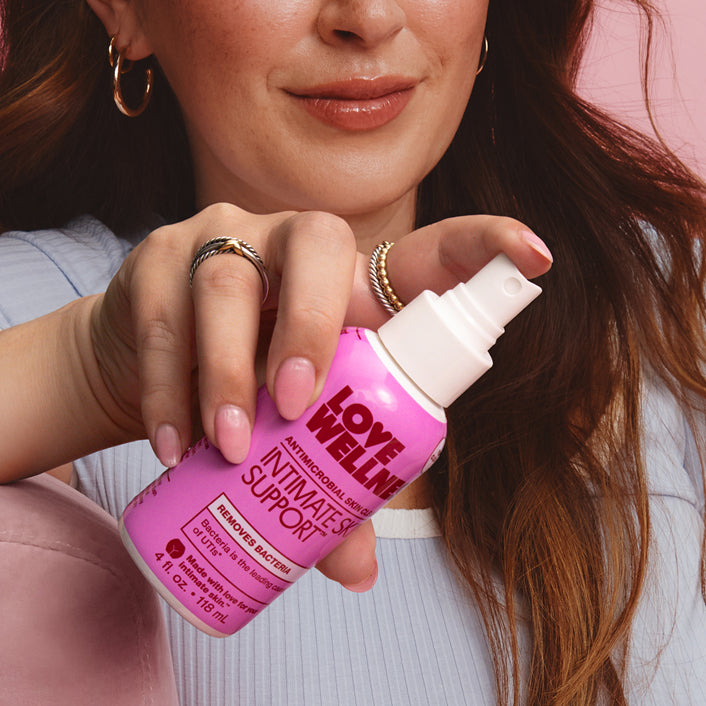
A spray can work here too. Intimate Skin Support™ is an FDA-cleared hypochlorous acid spray for external skin that supports the natural healing process of minor irritations and abrasions, like razor burn. And if this area runs dry between flares, we’ve written a full guide to moisturizing the bikini area.
Skip anything with alcohol, added fragrance, or undiluted essential oils, and don’t scrub. All of it stings on contact and sets the healing back.
Clear the Trapped Hair Safely
Chemical exfoliation beats physical exfoliation on inflamed skin. A peer-reviewed review of treatments for razor bumps supports both salicylic acid and glycolic acid, and found glycolic acid does something specific: it reduces the curvature of the hair shaft itself, making re-entry into the skin less likely.
Salicylic acid, being oil soluble, works down into the follicle, while glycolic acid works at the surface. Keep both at low over-the-counter strengths, on the outer bikini line only, and never on the vulva or any mucosal tissue.
Physical scrubs and loofahs make a flare worse. Save gentle physical exfoliation for calm skin between shaves; we cover the technique in our guide to exfoliating the bikini area. During a flare, a warm compress softens the skin and helps a hair work its own way out.
The tweezers stay in the drawer, with one exception: a hair that has already fully looped above the surface can be gently lifted.
Signs a Bump Has Become Infected
Most razor bumps stay irritated without ever becoming infected. Take notice when you see expanding redness, warmth, increasing pain, yellow drainage, or a bump growing after several days instead of shrinking. Fever means see someone now. Cleveland Clinic lists these among the warning signs for infected ingrown hairs.
A normal inflamed follicle stays small and settles. Spreading redness with deep tenderness can mean cellulitis or an abscess, which need medical care rather than home care.
Why Razor Bumps Keep Coming Back
If you get bumps no matter how careful you are, your hair type is the likely reason. Coarse, curly hair curves back toward the skin as it grows, so some follicles will trap hairs even with perfect technique. That comes down to biology, and it isn’t a hygiene failure.
Run your routine through this checklist:
-
A dull blade drags and tears instead of cutting clean
-
Multi-blade razors cut below the skin line, giving the regrowing tip more skin to pierce
-
Pulling the skin taut while you shave does the same thing
-
Dead skin cells build up and narrow the follicle opening
-
Tight leggings, non-breathable underwear, and sitting in sweaty workout clothes add friction and occlusion
-
Fragranced shave foams, scented body wash used as shave lube, and harsh cleansers irritate the skin before the razor touches it
If two or three of these sound familiar, the prevention routine below is where your problem gets solved.
How to Shave the Pubic Area Without Bumps
Prevention comes down to a repeatable routine. These steps line up with the American Academy of Dermatology’s razor bump prevention tips, adapted for the bikini line.
-
Shave at the end of a warm shower. Three to five minutes of warmth softens the hair so the blade cuts clean without tugging.
-
Cleanse first, gently. Our pH Balanced Cleanser™ is a clinically studied, OB/GYN-developed vulva cleanser formulated to match the body’s naturally acidic pH; in a third-party clinical study of 31 women, 100% reported no vaginal pH disruption with daily use. Our full range of sprays and cleansers is built on the same fragrance-free standard.
-
Exfoliate lightly, and only on calm skin. Never mid-flare.
-
Lubricate generously. Use a fragrance-free shave gel or cream and reapply as you go. Bare skin or plain soap raises drag, and drag raises bumps.
-
Mind the blade. Sharp, clean, and yours alone. Replace it every 5 to 7 shaves, rinse it after every stroke, and let it dry between uses.
-
Shave with the grain. Short, light strokes, no pressure, and no stretching the skin or repeat passes over the same spot.
-
Finish cool. Rinse with cool water, pat dry, and apply a fragrance-free moisturizer or barrier cream. Wait before anything scented goes near the area.
-
Recover well. Breathable cotton underwear, loose bottoms for 24 hours, and a prompt shower after sweating. A quick pass with fragrance-free intimate wipes can hold you over until you can rinse off.
One more lever: cadence, and it cuts both ways. While skin is healing, pause completely. Once it’s healed, derma\tologists suggest shorter gaps between shaves, since hair left to grow long between sessions has more time to curve back into the skin.
If Bumps Persist Despite Good Technique
For some hair types, shaving to the skin will always be a gamble. Weigh the alternatives.
-
Trimming to stubble with scissors or clippers is the lowest-irritation option. You give up the bare finish, and in exchange the hair tip never dips below the skin. An electric trimmer doesn’t cut as close as a wet shave, which is exactly why it causes fewer bumps.
-
Depilatory creams dissolve hair chemically, and reported chemical burns from them cluster in the pubic area, where skin is thin and sensitive. Patch test first, follow the timing exactly, and never apply one to broken or flaring skin.
-
Waxing and sugaring remove hair at the root, so there’s no sharp cut tip left behind. Regrowing hair can still ingrow, and inflamed skin should never be waxed. If you go this route, aftercare following a Brazilian wax matters as much as the wax itself.
-
Laser hair removal is the standard recommendation for chronic razor bumps because it reduces follicle activity long term. In a study of laser treatment for chronic pseudofolliculitis, 70% of patients saw at least 75% fewer lesions after four to six sessions, though hair can regrow over time and results vary with hair and skin tone. Expect multiple visits and a real cost.
-
Growing the hair out is the option nobody markets, and it’s the only one with a 100% success rate, because it removes the cause entirely. Pubic hair serves a purpose, and keeping it is as legitimate a choice as removing it. Your bikini line, your call.
Dark Marks and Scarring After Razor Bumps
Once the bumps fade, many women are left with dark marks. That’s post-inflammatory hyperpigmentation, the extra pigment your skin produced while inflamed.
Picking, squeezing, and repeated flares drive it, which is why the real fix sits upstream in prevention, a point the peer-reviewed literature on managing post-inflammatory hyperpigmentation makes directly.
Expect fading to take months, sometimes many months, and to run slower in deeper skin tones, per the clinical reference on post-inflammatory hyperpigmentation. Protect any sun-exposed bikini line with SPF, since UV deepens the marks. See a dermatologist about keloids or scarring that won’t budge.
When to See a Healthcare Provider
Book an appointment if any of these apply:
-
Bumps haven’t improved after two weeks without hair removal
-
Signs of infection: spreading redness, warmth, pus, or fever
-
Recurrent painful nodules in the groin or skin folds, or bumps appearing with no hair removal at all
-
Any uncertainty about whether a lesion is shaving related or an STI, since testing is the only way to know
-
Razor bumps that keep returning despite good technique, because prescription options like topical retinoids, antibiotics, and in-office procedures exist for chronic cases
None of this is dramatic. It’s the same logic as seeing a dentist for a tooth that keeps aching: some problems need tools you don’t have at home.
Treat the Flare, Then Change the Routine
Razor bumps respond to patience more than products. Stop shaving, cool and moisturize the skin, let a chemical exfoliant free the trapped hairs, and give it a couple of weeks. Then decide what changes: a sharper blade, a gentler routine, a trimmer, or no removal at all.
The skin down there deserves the same care as the skin on your face. A fragrance-free cleanser, a barrier-supporting moisturizer, and real recovery time between shaves can be part of a routine that keeps your bikini line comfortable at every stage of life.
*