







You ate a normal lunch. Nothing wild. An hour later your waistband is digging in, your stomach feels tight, and you’re wondering how a turkey sandwich turned into this. Or maybe it’s the week before your period, and your belly has quietly inflated for reasons that feel deeply unfair.
That feeling is bloating, and almost every woman knows it. Most bloating is temporary and manageable once you know what’s driving it. If you want to explore bloating support while you read, we’ve rounded up options, but a lot of relief starts with simple habits.
What Causes Bloating
Bloating is temporary swelling and pressure in your abdomen, usually from trapped gas or fluid. It’s a distension of the belly, which is a different thing from weight gain or the heavy, satisfied feeling after a big meal. That distinction matters, because how you debloat depends on what’s going on.
Most gas comes from one of two places. The first is bacterial fermentation in your large intestine, where gut bacteria break down fiber and certain carbs and produce gas as a byproduct. The second is swallowed air, called aerophagia, which sneaks in while you eat and drink.
Your gut microbiome shapes how much gas you make. A balanced mix of gut bacteria handles fermentation quietly. When that balance is off, fermentation can ramp up and leave you feeling gassy and swollen more often than you’d like.
Fluid retention is a separate mechanism. Here the problem isn’t gas at all. Your body holds onto extra water, often driven by sodium or hormones, and that water weight shows up as puffiness and a tight, full feeling. Naming your cause is the first real step, since gas, water retention, and constipation each respond to different approaches.
Common Triggers Behind Everyday Bloating
Food is the usual suspect. Carbonated drinks pump carbon dioxide straight into your gut. High-FODMAP foods like garlic, onions, broccoli, and beans ferment heavily. Excess salt pulls in water, sugar alcohols draw fluid into the intestines, and dairy bloats anyone who’s lactose-sensitive.
How you eat matters as much as what you eat. Eating too fast, chewing gum, sipping through straws, and talking through a meal all send extra air down with your food. That swallowed air has to go somewhere.
Lifestyle matters too. Sitting all day slows digestion, poor sleep throws off your gut rhythm, and dehydration makes constipation and bloating worse. Tolerance also shifts. A food that bloats you today might sit fine in a few months once your microbiome adjusts, so no single trigger list is permanent.
Hormonal and Menstrual Bloating
If your bloating runs on a schedule, your cycle is likely involved. This is the piece most generic bloating advice skips, and it’s often the whole story for women.
In the luteal phase, the stretch after ovulation and before your period, progesterone rises. That shift encourages your body to hold onto sodium and water, and it slows digestion, which means food and gas move through more sluggishly. The result is the familiar pre-period pooch.
PMS bloat and mid-cycle bloat can feel different. Research suggests fluid retention peaks around the first day of your period rather than only building beforehand, so bloat that lingers into your period is normal. If cycle-linked bloating is your pattern, our guide to period bloating causes and remedies goes deeper.
Stress and the Gut-Brain Connection
Your gut and brain talk constantly, and stress changes the conversation. When you’re anxious or wound up, digestion slows and your gut becomes more sensitive, so the same amount of gas registers as more discomfort.
That’s why bloating can spike during a stressful week even when your diet hasn’t changed. If this sounds like you, we dig into the mechanism in can stress cause bloating.
How to Debloat Your Stomach Fast
When you’re bloated right now and want relief, these are the moves that help gas move and fluid rebalance. Start gentle and see what your body responds to.
1) Take a Short Walk
Ten to fifteen minutes of easy movement after a meal stimulates your digestive tract and helps gas pass. One randomized trial in people with functional bloating found a short post-meal walk eased symptoms about as well as medication. That was a specific patient group, but a gentle walk is low-risk for most of us.
2) Try Abdominal Self-Massage
Following the path of your large intestine can help trapped gas move along. Start above your right hip, circle up toward your right ribs, move across your upper abdomen, then down toward your left hip. Repeat a few times, and stop if you feel any sharp pain.
3) Use Warmth
A warm bath or a heating pad relaxes the muscles around a tense GI tract, which can ease cramping and pressure. The muscle relaxation is what does the work, so ten or fifteen minutes is enough.
4) Hydrate and Reach for Calming Herbs
Water helps flush excess sodium and keeps things moving. Ginger and fennel are carminative herbs, meaning they help gas pass. Peppermint is the most-studied of the bunch, though the strongest evidence points to enteric-coated peppermint oil capsules in people with IBS rather than peppermint tea.

5) Ease Trapped Gas With Position and Breath
Gentle yoga shapes like Child’s Pose or Happy Baby, or a few slow squats, can shift trapped gas. Slow belly breathing helps too by relaxing the abdominal wall.
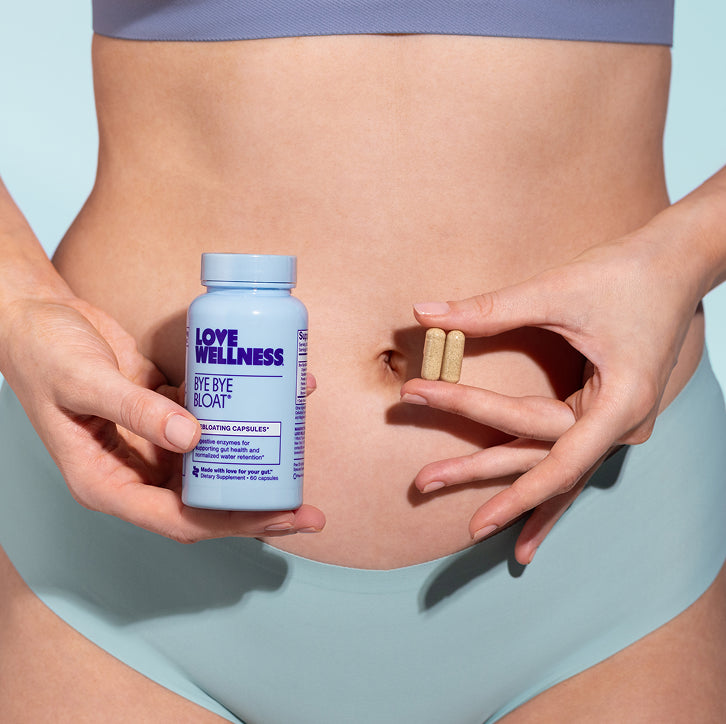
Where does a supplement fit? Bye Bye Bloat® is one option alongside the movement, heat, and hydration above, not a replacement for them. It’s a digestion supplement with digestive enzymes, organic ginger, and organic parsley leaf that gently eases hormonal and food-related bloating and supports normal water retention.
In a third-party clinical study of 30 women, 7 in 10 agreed it’s fast-acting, though best results usually come with a few months of consistent use.

Long-Term Habits for Less Bloating
Fast relief handles the moment. If you want less bloating overall, the bigger payoff is in daily habits. None of this requires a punishing cleanse or a four-day protocol, only support that fits the life you already have. If you’d rather start with a ready-made routine, our Bloating Relief Kit bundles a few of these habits into one.
Eat in a Way Your Gut Can Keep Up With
Sit down for meals, slow your pace, and chew thoroughly. Chewing kicks off digestion by mixing food with saliva and digestive enzymes before it hits your stomach, which means less work downstream. Smaller, more evenly spaced meals also sit easier than one enormous plate.
Support a Balanced Microbiome
A steady supply of fiber and fermented, probiotic-rich foods feeds the good bacteria that keep digestion running smoothly. Prebiotic foods like apples, bananas, and oats act as fuel for those probiotics, which is why pairing the two matters. You can explore gut health support if you want a routine to build on.
A daily probiotic is one route to microbiome support. Gut Feelings Probiotics® is our digestive probiotic, a clinically studied blend of pre- and probiotics that supports calm digestion and a healthy microbiome, with support for regularity and occasional gas relief.

For fiber specifically, Sparkle Fiber® pairs naturally with a consistent fiber habit. Ramp up slowly, since adding too much fiber too fast is one of the most common causes of new bloating.
Reduce Swallowed Air
Since a chunk of bloating is swallowed air, trimming the sources helps. Cut back on carbonated drinks, skip the gum, ditch the straw, and try not to eat on the run. Small changes, but they add up over a day.
Manage Stress and Sleep
Because stress and digestion are linked, winding down is gut care. A short daily meditation, a consistent wind-down routine, and steady sleep all give your digestive system room to do its job. You don’t need a whole new lifestyle, only a little consistency.
Foods That Debloat vs. Foods That Bloat
No food list is universal, but some patterns hold. Use this as a starting point, then pay attention to your own tolerance. For a deeper look at the usual offenders, our guide to what foods cause bloating breaks them down.
Foods more likely to bloat:
-
High-FODMAP foods such as garlic, onions, beans, and broccoli
-
Carbonated drinks, which add gas directly
-
High-salt foods, which drive water retention
-
Sugar alcohols found in many sugar-free products
Foods that usually sit easier:
-
Ginger and fennel, both calming to the gut
-
Cucumber and water-rich produce, which support hydration
-
Papaya, which contains natural digestive enzymes
-
Leafy greens, gentle and nutrient-dense for most people
One caveat: a food that bloats you short-term isn’t automatically bad for you. Broccoli can cause gas today and still feed your microbiome in a way that pays off long term. Rather than banning foods outright, an elimination-and-reintroduction approach helps you learn what your body tolerates. Our list of foods that de-bloat the natural way has more options.
When Bloating Signals Something More
Most bloating is functional and passes. Sometimes it’s a signal worth taking to a doctor. See a healthcare provider if your bloating is persistent or worsening, or if it comes with severe pain, unexplained weight loss, blood in your stool, changes in your bowel habits, or fever and vomiting.
Ongoing bloating can also point to conditions like IBS, SIBO, or a food intolerance, which are worth diagnosing properly instead of guessing at. Occasional bloating after a big or salty meal is a different animal from bloating that shows up daily and won’t quit. Trust your read on your own body, and get checked if something feels off.
How to Debloat FAQs
How long does bloating last?
Gas-driven bloating usually eases within a few hours, often faster with a walk or warmth. Water retention from a salty meal usually resolves within a day or two. Cycle-related bloating can last several days and usually fades once your period starts.
What’s the fastest way to debloat?
A ten-to-fifteen-minute walk is the best-supported quick option. Pair it with water, a warm compress, and a few minutes of slow belly breathing. If you’re constipated, that needs addressing first, since nothing moves gas out quickly while things are backed up.
Does drinking water help with bloating?
Yes, especially for water-retention bloat. It sounds backwards, but staying hydrated helps your body release excess sodium and keeps digestion moving. Sip steadily through the day rather than chugging a large glass at once, which can add swallowed air.
Why am I bloated every day?
Daily bloating usually points to a pattern rather than a single meal: a food intolerance, eating fast, low fiber, constipation, chronic stress, or a gut imbalance. If it’s every day and doesn’t respond to the habits above within a few weeks, see a provider to rule out IBS, SIBO, or celiac disease.
Finding Your Own Debloat Playbook
Debloating is matching the remedy to the cause. Trapped gas responds to movement, massage, and carminative herbs. Water retention eases with hydration and less salt. Cycle-driven bloat softens once you know it’s coming and plan around it.
Build a couple of the fast moves and daily habits here into your routine, notice what your body responds to, and adjust. Bloating is one of the most common things women deal with, and with a little attention you can feel comfortable in your own body far more of the time.
*