




Somewhere around the end of October, it starts. You wake up in the dark, drag through the afternoon, and by 5pm your brain has quietly clocked out for the day. If your mood dips when the days get shorter, you’re in very normal company.
The winter blues are a real seasonal pattern with real biology behind them. Understanding that biology makes the fix less mysterious, whether that’s morning light, steadier sleep, or mood and sleep support that fits the life you already have.
What the Winter Blues Are
The winter blues describe a recurring seasonal dip in mood, energy, and motivation tied to shortening daylight. It’s a common experience, and it is not a medical diagnosis. Seasonal affective disorder (SAD), by contrast, is a diagnosable form of depression with a seasonal pattern.
The dividing line is daily functioning. With the winter blues, you feel flatter and slower, but you still get to work, see people, and take care of yourself. With SAD, low mood persists most of the day for weeks and starts interfering with work, relationships, and self-care.
You probably know the timeline. The slump often sets in after the autumn clock changes, deepens through January and February, then lifts as spring daylight returns. Plenty of adults notice some version of this shift every year, while a much smaller share meet the criteria for SAD.
Why Less Daylight Changes How You Feel
Your January flatness has a mechanism behind it. Four systems respond to light, and each one shifts when the days shorten: your internal clock, melatonin, serotonin, and vitamin D.
Your Brain Reads Light as a Signal
Light does more than let you see. When it enters your eye, specialized cells relay the signal to the suprachiasmatic nucleus, the small brain region that keeps your circadian rhythm, your body’s internal clock, running on schedule. Your body treats light as information about what time it is.
The dose matters more than you’d think. Even an overcast morning outdoors delivers roughly 2,500 lux of light, and a sunny day can run 50,000 or more, while a well-lit room sits far below that. Feeling like you get plenty of light at your desk is usually an illusion.
Winter shortens the photoperiod, the stretch of usable daylight your body can read. Fewer bright morning hours means a weaker, later signal to the clock that runs your energy, appetite, and mood.
Circadian Rhythm and Melatonin Timing
Melatonin is the hormone that tells your body it’s nighttime. Darkness stimulates it, light suppresses it, and the timing runs through that same master clock.
When the sun rises late, the morning light that normally shuts melatonin off arrives late too, so you wake groggy with the night signal still running. When the sun sets at 5pm, evening melatonin starts climbing earlier. That’s the it’s-dark-and-I’m-done feeling.
Researchers call this a phase delay. It shows up as groggy mornings, low daytime drive, and then, unfairly, trouble falling asleep at a normal hour.
Serotonin, Cravings, and Motivation
Serotonin, a brain chemical that helps regulate mood, also tracks the light. One study in The Lancet found serotonin turnover in the brain was lowest in winter and rose with hours of bright sunlight. The research is associational rather than proof of cause, but the seasonal pattern is consistent.
Craving carbs harder in January belongs to the same picture. Increased appetite and carbohydrate cravings are recognized features of seasonal mood patterns in the clinical literature. That’s permission to stop treating it as a willpower failure. Your biology shifted; your discipline didn’t collapse.
Vitamin D and the Winter Gap
Your skin makes vitamin D from sunlight, and in winter that production nearly stops. A classic study found no vitamin D synthesis at all from November through February in Boston, because the winter sun sits too low. Shorter days and covered skin finish the job.
Low vitamin D status is common in winter and correlates with low mood, but be clear-eyed about supplementation. A trial of more than 18,000 adults found long-term vitamin D supplementation did not reduce depression risk. It fills a common winter nutritional gap.

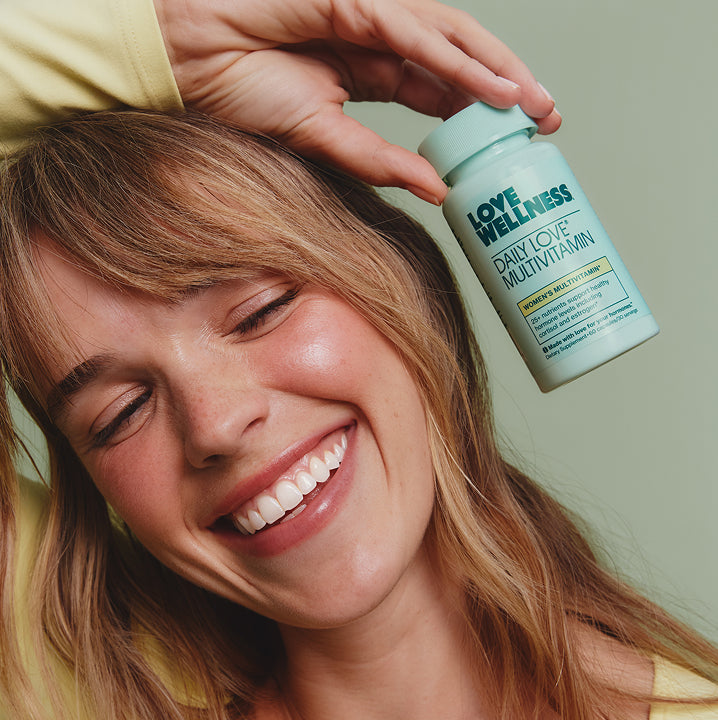
Maintaining baseline intake through the dark months is where a daily format helps. Our Daily Love® Multivitamin carries D3 among its 25+ nutrients, packed with hard-to-find nutrients to fill common diet gaps.
Winter Blues vs. Seasonal Affective Disorder
SAD is a major depression with a seasonal pattern. The clinical picture described by the National Institute of Mental Health involves low mood most of the day, nearly every day, for at least two weeks, lasting roughly four to five months and recurring in the same season year after year.
|
Factor |
Winter blues |
Seasonal affective disorder (SAD) |
|
Severity |
Mild: flat, slow, a little irritable |
Persistent low mood most of the day |
|
Duration |
Comes and goes through the dark months |
Two-plus weeks at a stretch, roughly 4 to 5 months a year |
|
Daily functioning |
You still work, socialize, and care for yourself |
Work, relationships, and self-care start slipping |
|
Common symptoms |
Lower energy, sleeping more, less socializing |
Loss of interest, oversleeping, appetite changes, difficulty concentrating, hopelessness |
|
Care |
Routine changes usually help |
Warrants a conversation with a healthcare provider |
Why Women Often Feel It More
Seasonal mood patterns show up more often in women, with the reproductive years being the most affected window. If that’s you, the winter dip may land harder, and it may also be harder to read.
Your cycle also interacts with the season, a part most winter content skips. A luteal-phase mood dip that lands in a dark January week compounds, and it can be hard to tell which one you’re feeling.
Tracking separates them. Note your mood against both the calendar and your cycle for a month or two. A pattern that follows your cycle points one direction; a pattern that follows the daylight points another.
Two look-alikes deserve a rule-out with your provider. Thyroid dysfunction can show up as depression and unusual tiredness, and iron deficiency produces the same low-mood, low-energy picture and improves as it’s treated. Both are simple blood tests.
How to Feel Better When the Days Are Short
Each of these works on the same light-and-timing systems, starting with the biggest lever.
Front-Load Morning Light
The highest-leverage change is free: get outside within the first hour of waking, ideally for 20 to 30 minutes, even under cloud cover. Cloudy daylight still delivers several times more light than indoor bulbs, and your internal clock reads it clearly.
Timing beats duration here. The morning signal anchors your rhythm for the whole day, which an afternoon walk can’t fully replicate. Take a call outside, walk part of your commute, or eat breakfast by the brightest window you have.
Light Therapy Lamps: How They Work and How to Use One
A light therapy lamp, sometimes called a SAD lamp, recreates that morning signal indoors. Look for 10,000 lux at the stated sitting distance, UV-filtered, with a panel large enough to fill your field of view. Many consumer lamps run too dim or too small.
Use it for 20 to 30 minutes shortly after waking, positioned above eye level and off to one side, eyes open but never staring into it. Morning bright-light exposure relieves symptoms for a large share of people within a few weeks when used consistently.
Most mistakes with a lamp are timing mistakes. Evening sessions push your rhythm the wrong way and can worsen the phase delay, sitting too far away cuts the dose, and skipping days blunts the effect. If you have bipolar disorder or an eye condition such as glaucoma or cataracts, check with a provider before starting.
Anchor Your Sleep Schedule
A consistent wake time, weekends included, is the daily reset your clock needs most. Sleeping in feels like repair, but in winter it usually deepens the slump by pushing your light exposure and melatonin timing even later.
Evening habits are the other half. Dim the overhead lights after dinner and wind screens down late in the evening, the counterpart to your bright mornings. We’ve covered the full routine in our guide to sleep hygiene, so no need to re-learn it here.
Move, Preferably Outdoors and Early
Movement has one of the most consistent evidence bases in this whole topic. A large umbrella review found regular physical activity improves symptoms of mild to moderate depression across nearly every activity type studied.
The winter cheat code is stacking. An outdoor morning walk delivers light, movement, and rhythm anchoring in one 20-minute block. Set the bar low on purpose; a brief daily walk beats an ambitious plan that stalls by February.
Protect Social Contact and Small Plans
Staying in feeds on itself. The less you see people, the less you feel like seeing people, and by February the calendar is empty. Scheduled, low-effort contact interrupts the loop: a standing coffee, a weekly call, a walk with a friend who also needs the light.
Keep something small on the calendar to look forward to. It sounds almost too simple, and it’s one of the cheapest mood supports there is.
Nutrition, Gut Health, and Supplement Basics
Handle the carb cravings without moralizing about them. Pair carbs with protein, keep meals regular, and let the craving be information rather than a verdict on your character.
Your gut and your brain talk constantly through the gut-brain axis, which is one reason digestion and mood keep showing up in the same conversations. We’ve unpacked the gut-brain connection in its own guide if you want the deeper version.
Supplements have an honest place here: filling nutritional gaps and supporting sleep, calm, and mood. They don’t treat a mood disorder, and we won’t pretend otherwise. A multivitamin covers the winter D3 gap, as above.

Big Brain Probiotics® pairs clinically studied probiotics and nootropics that support brain function and mood through that same gut-brain axis, and the research on probiotics and mental health is a story of its own.

For winter’s sleep-timing problem, Sleeping Beauty® helps you relax and fall into a restful sleep, with melatonin that helps regulate the sleep-wake cycle. Our broader mood support lineup sits alongside both if you’re browsing.
When Low Mood Needs More Than a Routine Change
Some winters need more than a better morning. Talk to a healthcare provider if you notice two or more weeks of persistent low mood, loss of interest in things you normally enjoy, sleep or appetite changes, difficulty functioning at work or home, or any thoughts of self-harm.
Seasonal patterns are treatable, and evidence-based options exist: talk therapy, clinical light therapy protocols, and medication where a provider decides it’s appropriate. A low mood that recurs each winter is useful clinical information, so bring the pattern with you to the appointment.
If you’re in crisis or having thoughts of self-harm, call or text 988 to reach the 988 Suicide & Crisis Lifeline, available around the clock.
Building a Winter Routine You Can Keep
A workable winter morning looks something like this: wake at a fixed time, get light within the hour, move a little, then eat. That sequence covers every mechanism in this article before 9am.
Start building it in October, before the clock changes, rather than reacting in January. If only one change is realistic, make it morning light; it’s the anchor everything else hangs on.
Track three things for four weeks: when you sleep, how your energy runs, and how your mood sits. That’s enough data to tell whether the routine is working or needs adjusting.
Winter Blues FAQs
Is the winter blues a real thing?
Yes. The winter blues describe a recognized seasonal dip in mood and energy tied to reduced daylight, and the biology behind it is well documented. It sits below the threshold of a formal diagnosis like seasonal affective disorder, which involves persistent symptoms that interfere with daily functioning.
What are the worst months for a seasonal low mood?
January and February, for most people in the northern hemisphere. The low point lags the December solstice because your body responds to weeks of accumulated short days, and the post-holiday stretch removes the distractions that carried you through December.
How long do the winter blues last?
Generally through the low-light months, easing as spring daylight returns. If low mood persists for more than two weeks at a stretch, worsens, or starts affecting work or relationships, that’s the signal to check in with a healthcare provider rather than wait for spring.
Do light therapy lamps really work?
For many people, yes. Morning bright-light exposure at 10,000 lux relieves symptoms for a large share of users within a few weeks. Results depend heavily on timing and consistency: morning sessions, most days, at the correct distance. Evening use can push your body clock the wrong way.
Can vitamin D help with winter mood?
It addresses a common winter deficiency, since your skin makes little to no vitamin D in the darkest months. Large trials have not shown supplementation to be a mood treatment, though. Take it to maintain baseline nutrition, and lean on light, sleep, and movement for the mood side.
Meet January With a Head Start
The winter blues run on light and timing, which means your best tools do too. A fixed wake time, 20 minutes of morning brightness, a bit of movement, and meals that keep you steady will carry most people through the dark months feeling like themselves.
If the season weighs heavier than a routine can handle, a provider can help, and seasonal patterns respond well to care. Either way, you can feel your best at every stage of life, including the stage where the sun sets at 5pm.
*