




It’s the last week of September, and it’s already getting dark before you’ve started cooking. Maybe you remember last January: dragging yourself out of bed, feeling flat by 3 p.m., wanting nothing but carbs and the couch. And now you’re searching for vitamins for seasonal depression, wondering whether they could help this year.
If that sounds familiar, you’re far from alone. Seasonal mood shifts have a name, they show up much more often in women, and because they arrive around the same time every year, you can get a head start this fall.
Vitamins for Seasonal Depression: The Short Answer
Seasonal depression is the everyday name for seasonal affective disorder (SAD). Clinically, doctors call it major depressive disorder (MDD), or sometimes bipolar disorder, with a seasonal pattern.
The National Institute of Mental Health (NIMH) groups SAD treatment into four categories: light therapy, psychotherapy, antidepressant medication and vitamin D. Light therapy and vitamin D are used for the winter pattern, and all four can be combined.
Even for vitamin D, NIMH describes the research as mixed. Some studies found it about as helpful as light therapy, and others found no effect.
Where do vitamins fit? For most women, they’re part of covering everyday nutrition, alongside the rest of your daily maintenance routine. Vitamin D, B vitamins, omega-3s and magnesium get the most attention for mood, while melatonin and probiotics connect more loosely through sleep and your gut.
The most useful first step is a blood test, so you know your levels before you add anything.
Why Darker Months Change Your Mood and Nutrient Needs
If you feel like a slightly different person by December, there’s real biology behind it. Your skin makes vitamin D from sunlight, when UVB rays turn a compound called 7-dehydrocholesterol into previtamin D3. Fewer daylight hours mean less of that.
According to NIMH, vitamin D is believed to support serotonin, a brain chemical linked to mood. So when winter pulls your vitamin D down, your serotonin activity may dip with it.
Your sleep shifts too. People with winter-pattern SAD make too much melatonin, the hormone that runs your sleep-wake cycle, which can mean sleeping longer and still feeling tired.
Some things lower your vitamin D in any month, including season, cloud cover, skin pigmentation (melanin), sunscreen, age, body weight and gut absorption issues. SAD is also more common farther north, where winter days are shortest.
A few other things you might recognize:
-
Winter-pattern SAD can bring overeating and carbohydrate cravings, so the 4:30 p.m. pasta craving is part of the pattern.
-
Reported ratios of women to men with SAD range from 3.5:1 to 9:1, and a first episode usually happens around age 30.
-
Low energy, fatigue, trouble concentrating and losing interest in things you love usually last four to five months of the year.
-
There’s a summer pattern too, with insomnia, poor appetite, weight loss, and restlessness or agitation.
SAD tracks changes in daylight hours, which is one way NIMH tells it apart from holiday stress.
Vitamin D, B Vitamins, Omega-3s and Magnesium
1) Vitamin D
Vitamin D is the one everyone mentions, since it’s the nutrient most tied to sunlight. It’s fat-soluble, your skin makes it, and in the brain it’s thought to activate tryptophan hydroxylase 2 (TPH2), the enzyme that turns tryptophan into serotonin.
A 2020 meta-analysis of 25 trials and 7,534 people found vitamin D reduced negative emotions overall. The clearest effect was in people with MDD and people starting at 50 nmol/L or below. Results varied a lot between trials, and none focused on SAD.
Researchers also can’t yet say whether low vitamin D causes low mood or results from it. Benefit has mostly shown up in people who start out low, and in one trial of 18,353 adults age 50 and older, 2,000 IU a day for a median of 5.3 years made no significant difference in depression.
That’s why your own number matters. Almost 1 in 4 people in the US have vitamin D levels that are too low or inadequate for bone and overall health, so it’s a reasonable thing to ask your provider to check.
A capsule also can’t stand in for daylight. NIMH treats light therapy as its own option, one that works by standing in for the missing daylight itself.
How to get it: fatty fish like salmon, mackerel and sardines, cod liver oil, egg yolks, and fortified milk, cereals and orange juice.
Supplements come as D2 (ergocalciferol), from plant sources, or D3 (cholecalciferol), from animal sources, and many people take them with a meal. The adult upper limit is 4,000 IU a day from all sources combined unless your provider recommends more for a set time. Too much can cause nausea, vomiting, muscle weakness, confusion and kidney stones.
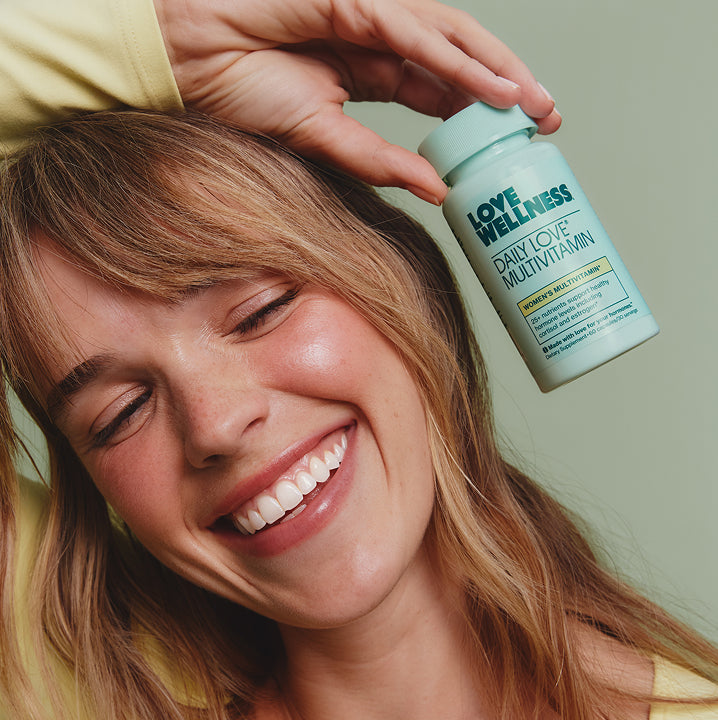
Our Daily Love® Multivitamin includes vitamin D3 and vitamin K2, along with vitamin B6. If you take it with a separate vitamin D, add the two amounts together when you check against that 4,000 IU limit.
2) B Vitamins: B12, Folate and B6
B vitamins are the next ones to check, especially if you eat mostly plants. B6, B12 and folate work together in one-carbon metabolism, a chain of reactions your body uses to build neurotransmitters. B6 helps make serotonin, and folate supports SAMe, which feeds neurotransmitter production.
Research has linked low B12 and folate levels with depression. That’s an association, so it doesn’t show that taking B vitamins changes how you feel.
You’re more likely to run low on B12 if you’re an older adult, have certain stomach or digestive conditions, or have had some GI surgeries. The same goes if you eat few or no animal foods. B vitamins are water-soluble, and you’ll find them as a B-complex, as single vitamins or in most multivitamins.
How to get it: meat, poultry, fish, eggs, dairy and fortified cereals (B12); leafy greens, legumes and lentils (folate); chickpeas, bananas and potatoes (B6). Food covers a lot here, and daily vitamins can help round out what’s harder to get from your plate.
3) Omega-3 Fatty Acids (EPA and DHA)
If salmon isn’t a regular on your plate, omega-3s are the ones to think about. EPA and DHA are two fats found mostly in fatty fish. In a meta-analysis of 26 trials and 2,160 people, formulas with at least 60% EPA, at doses of 1 gram a day or less, showed benefit for depression symptoms compared with placebo. DHA-dominant formulas didn’t, and the overall effect was modest.
That’s why some people check the EPA and DHA amounts on a label. Fish oil is the most common source, and algae oil is an option if you don’t eat fish.
How to get it: salmon, sardines and mackerel for EPA and DHA. Walnuts, chia and flaxseed contain ALA, a plant omega-3. For amounts, see our guide to how much omega-3 to take per day.
4) Magnesium
Magnesium comes up whenever stress does, which in December can feel like always. It’s involved in your body’s stress response, and a 2020 narrative review suggests low magnesium and stress may feed each other in a loop.
It comes in several forms, including glycinate, citrate and oxide. Magnesium shows up in a lot of bedtime routines too, and our women’s guide to magnesium for sleep covers that side.
How to get it: pumpkin seeds, almonds, spinach, dark chocolate, avocado, legumes and whole grains.
Supporting Players: Sleep, Gut Health and Other Supplements
1) Melatonin
If your sleep feels off all winter, melatonin has probably crossed your mind. It’s the hormone that times your sleep, and its track record in SAD is thin. Small trials suggest some people with SAD sleep better, but a 2018 review found no place for it as a SAD treatment and called for more research.
Side effects can include drowsiness, headache, dizziness and nausea, and long-term safety is unknown. Winter-pattern SAD already involves extra melatonin, so talk with your provider about whether and when to take it.

If you both decide it fits, our Sleeping Beauty® pairs melatonin with magnesium, valerian root and lemon balm to help you unwind and fall asleep. It sits with the rest of our sleep support options.
2) Probiotics and the Gut-Brain Axis
Your gut is part of this story too. About 90% of your body’s serotonin is made in your gut, but that serotonin can’t cross into your brain, which makes its own from tryptophan. Our post on the gut-brain connection explains how the two talk to each other.
Research on probiotics and mood is early and inconclusive. Some trials look promising, and reviewers point to small, weakly designed studies as the reason there’s no firm answer yet.

How to get it: yogurt, kefir, sauerkraut, kimchi and other fermented foods.
Our Big Brain Probiotics® combine probiotics with lion’s mane, cordyceps and reishi for daily gut-brain support.
3) St. John’s Wort and Vitamin C
St. John’s wort comes up a lot, and NCCIH reports only limited evidence from small studies that it may help some SAD symptoms, nothing conclusive. It can weaken antidepressants, birth control pills, blood thinners, cyclosporine, digoxin and some HIV and cancer drugs, and it can make your skin more sensitive to the sun.
With certain antidepressants, it also carries serious serotonin-related risks. Low vitamin C may worsen depressive symptoms, though researchers don’t fully understand that connection yet.
Seasonal Mood Nutrients at a Glance
For SAD in particular, the evidence on each of these is mixed or early, and light therapy, talk therapy and medication have more behind them.
|
Nutrient |
Role |
Food sources |
Considerations |
|---|---|---|---|
|
Vitamin D |
Made in skin from sunlight; linked to serotonin activity |
Fatty fish, egg yolks, fortified milk and cereal |
Fat-soluble; adult upper limit 4,000 IU/day from all sources |
|
B12, folate, B6 |
Help build neurotransmitters |
Meat, eggs, dairy, leafy greens, legumes, bananas |
Water-soluble; B12 needs extra attention on plant-based diets |
|
Omega-3 (EPA, DHA) |
Fats found mainly in fatty fish |
Salmon, sardines, mackerel |
Fish oil or algae oil; check EPA and DHA amounts |
|
Magnesium |
Involved in the stress response |
Pumpkin seeds, almonds, spinach, legumes |
Comes in several forms (glycinate, citrate, oxide) |
|
Melatonin |
Times your sleep-wake cycle |
Made by your body |
Winter-pattern SAD already involves extra melatonin; ask about timing |
|
Probiotics |
Live microbes tied to the gut-brain connection |
Yogurt, kefir, sauerkraut, kimchi |
Strains and amounts vary by product |
|
St. John’s wort |
Herbal supplement |
None |
Weakens many medicines, including antidepressants and birth control |
Get Tested Before You Supplement
A blood test tells you where you’re starting. Vitamin D shows up on labs as 25-hydroxyvitamin D, or 25(OH)D, and your doctor can check B12 at the same visit. Ask which other labs make sense for you.
The FDA isn’t authorized to approve dietary supplements for safety and effectiveness before they’re sold, so a third-party testing seal like USP or NSF is one way to check what’s in the bottle.
“Natural” doesn’t mean risk-free. Keep these in mind:
-
Vitamin D can build up, so count every source, including your multivitamin, against the 4,000 IU limit.
-
St. John’s wort can interfere with antidepressants and birth control.
-
Several products with overlapping ingredients add up faster than you’d think.
Tell your provider about every supplement you take, especially if you’re on antidepressants or birth control.
Planning Ahead Before the Days Get Short
If last winter was hard, early fall is a good time to book an appointment, ask for that blood test and talk through what fits you. NIMH notes that people with a history of SAD might benefit from starting treatment before fall, though few studies have looked at whether SAD can be prevented.
That guidance refers to the four treatment categories, planned with a provider. The FDA has also approved an extended-release form of the antidepressant bupropion that, taken daily from fall through early spring, can keep seasonal episodes from coming back for many people.
Aim for a plan that fits the life you already have, with a few habits you can keep up through March:
-
A blood test for vitamin D and B12
-
Meals built around fish, eggs, leafy greens, legumes and fermented foods
-
Morning light, outdoors or from a light box
-
A conversation with your provider about which supplements, if any, to add
What Works Alongside Nutrients
Light therapy (phototherapy) means sitting near a 10,000-lux light box for about 30 to 45 minutes a day, usually first thing in the morning, from fall to spring. The box is about 20 times brighter than regular indoor light and filters out UV.
If you have certain eye conditions or take medication that makes you sensitive to light, you may need medical supervision. Light therapy can also trigger mania in bipolar disorder that hasn’t been recognized or treated.
A morning walk outside counts too. In one small study, an hour-long morning walk outdoors looked like a possible alternative to artificial light.
CBT-SAD, a version of cognitive behavioral therapy adapted for SAD, worked as well as light therapy in a head-to-head comparison, and its benefits seemed to last longer. Antidepressants can help on their own or with talk therapy, and they usually take four to eight weeks to start working.
On the food side, a Mediterranean-style pattern of fish, leafy greens, legumes and nuts is rich in vitamin D, B vitamins, omega-3s and magnesium. Supplements sit alongside all of this as one part of your care plan.
When to Talk to a Doctor
Reaching out early is always okay. The winter blues can make you want to hibernate for a few weeks, while SAD gets in the way of your work, relationships, sleep or appetite. If you’ve felt low most of the day, nearly every day, for two weeks or more, that’s your cue.
Reach out, too, if the pattern returns every year or keeps getting worse, and remember that summer-pattern symptoms like insomnia, agitation and weight loss count. A SAD diagnosis requires the seasonal pattern for at least two years in a row. Check in with your provider before you start or stop anything, especially a prescription.
If you’re in crisis or thinking about harming yourself, call or text 988 to reach the 988 Suicide & Crisis Lifeline, or chat at 988lifeline.org. For treatment referrals and information, SAMHSA’s National Helpline is free, confidential and open 24/7 at 1-800-662-HELP (4357).
What to Bring to Your Fall Checkup
Feeling heavier and slower when the light disappears is real, and it’s common, especially for women. It’s also something you can plan for, starting with a blood test and an open conversation with your provider.
Bring notes on when your symptoms started last year and how long they lasted, a request for 25(OH)D and B12 testing, and a list of every supplement you take, including the vitamin D in your multivitamin. Ask about a morning light box, CBT-SAD and whether medication makes sense for you.
Once you know your numbers, the nutrients that cover real gaps in your diet can be one steady part of how you take care of yourself this winter. Add morning light and the right support from your provider, and you have a plan to help you feel your best through the darkest weeks.
*