











You finished the antibiotics. The symptoms cleared, you felt like yourself again, and then a few weeks later the fishy odor and gray discharge crept back. If that loop sounds familiar, you’re not doing anything wrong.
Recurring bacterial vaginosis is one of the most common frustrations women bring to their gynecologists, and it’s exactly why so many of us start googling probiotics at 11pm.
Probiotics can do some real things for BV, and there are some things they can't do. Both are worth knowing before you spend money on one. If you want the wider picture first, our overview of whether probiotics help with vaginal health is a good companion read.
How Probiotics Affect BV
BV is best understood as a disruption of the vaginal microbiome. Your vagina normally hosts a community dominated by protective Lactobacillus bacteria. When those decline and anaerobic bacteria like Gardnerella vaginalis overgrow, the balance tips and vaginal pH climbs above its usual acidic range.
That shift in pH is the heart of the problem. Healthy vaginal Lactobacillus produce lactic acid and hydrogen peroxide, and as Cleveland Clinic explains, these compounds keep the vaginal environment in its protective acidic range of roughly 3.5 to 4.5, holding less friendly bacteria at bay.
Probiotics enter the picture as a microbiome-support tool. The idea is to reintroduce or encourage the Lactobacillus strains that help restore that low, protective pH. Probiotics support the environment your body is trying to rebuild.
What the Evidence Says So Far
The evidence for probiotics and BV is promising but mixed, and the strongest findings cluster around recurrence and pH support rather than curing an active case.
The clearest signal shows up when probiotics are used alongside antibiotics. A systematic review published in Open Medicine pooled two trials measuring recurrence 12 to 16 weeks after treatment and found that pairing intravaginal probiotics with antibiotics lowered recurrence risk, with a relative risk of 0.62. The same review found no significant difference in short-term cure rate.
Standalone use is where the evidence gets thinner. In one Australian trial, adding a Lactobacillus vaginal probiotic to metronidazole did no better than placebo at preventing recurrence by the six-month mark. Findings like that are why researchers describe the picture as favorable-but-inconsistent rather than settled.
A few limitations are worth keeping in mind as you read any probiotic claim. Results vary by the specific strain studied, dosages differ widely between products, and study quality isn’t uniform. The same review rated most of its included trials as unclear or high risk of bias, and several found little probiotic effect at all.
Which Probiotic Strains Matter for BV
This is where most probiotic shopping goes sideways. Not all probiotics are the same, and the general digestive blend in your cabinet may share almost nothing with the strains studied for vaginal health.
The strains with evidence behind them
A handful of Lactobacillus strains show up repeatedly across vaginal health research. A few are worth knowing by name:
-
Lactobacillus rhamnosus and L. reuteri, often studied together, are the most-cited pairing in the BV literature.
-
L. crispatus is associated with a stable, healthy vaginal microbiome and features in some of the more rigorous trials.
-
L. acidophilus is one of the most-researched strains for maintaining vaginal balance.
You don't need to memorize the list. The point is that vaginal relevance is strain-specific, and a probiotic marketed for gut health won't necessarily contain any of these.
How to read a supplement label
Once you know strains matter, a label becomes much easier to read. Three things are worth checking:
-
The full strain identifier, meaning genus, species, and often a strain code (like GR-1 or CTV-05). Vague “Lactobacillus blend” language tells you less than you’d think.
-
CFU count, or colony-forming units, which indicates how many live organisms you’re getting. More isn’t automatically better, but the number should be stated clearly.
-
Format and storage, since viability depends on how a product is made and kept.

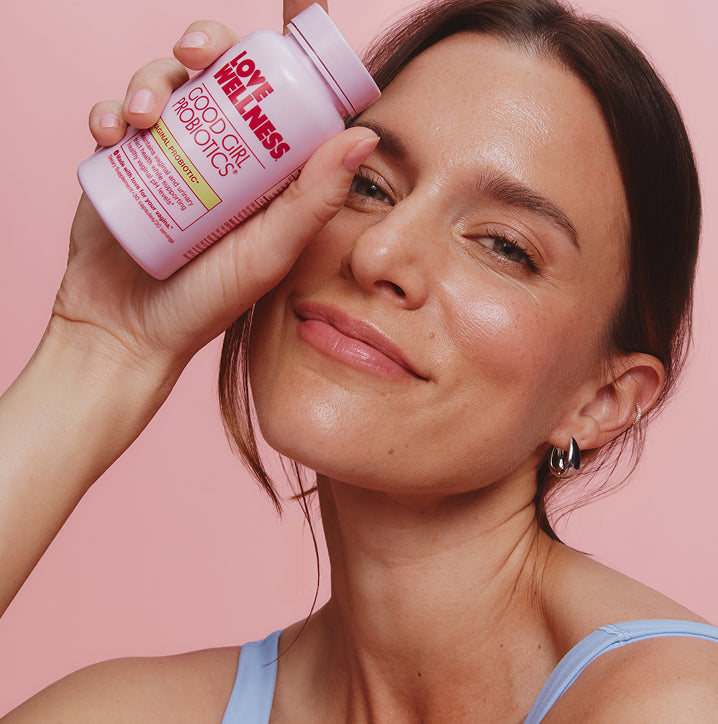
Our strain-by-strain explainer goes deeper if you want to get comfortable reading labels. As one strain-transparent example, our Good Girl Probiotics® lists all 9 of its strains, including L. acidophilus and L. plantarum, along with a 1 billion CFU count at manufacture, so you can see exactly what’s inside.
Oral vs Vaginal Probiotics
Probiotics for vaginal health come in two main routes, and each has a different logic.
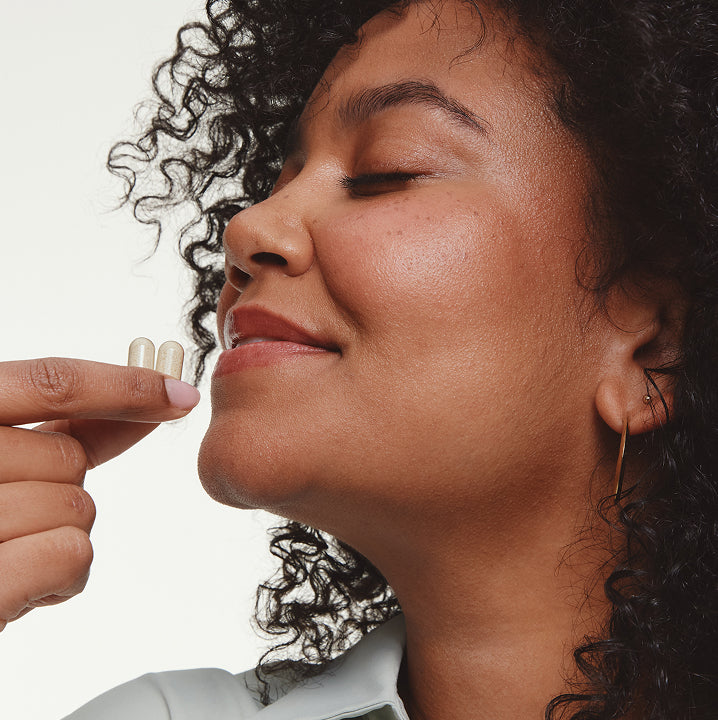
Oral capsules travel through the gut, and the proposed mechanism is the gut-vagina axis: beneficial bacteria colonizing from the digestive tract and reaching the vaginal environment over time. It’s convenient and easy to stay consistent with, though the colonization pathway is still being studied.
Vaginal suppositories or inserts deliver bacteria directly to the site. That can mean a faster local effect, with the tradeoff of a more involved routine. Products in the suppository category sit on this side of the comparison.
|
Criteria |
Oral capsules |
Vaginal suppositories |
|---|---|---|
|
Delivery route |
Through the gut |
Directly local |
|
Onset |
Gradual |
Often faster locally |
|
Evidence |
Gut-vagina pathway still being studied |
Direct-delivery trials exist |
|
Ease of use |
Simple daily habit |
More involved |
|
Typical use case |
Ongoing maintenance |
Targeted local support |
Our Good Girl Probiotics® is a clinically studied, OB/GYN-developed oral capsule taken once daily, formulated to support the vaginal microbiome, healthy pH, urinary tract wellness, and fresh odor.
It's built for daily upkeep, so it isn't the thing to reach for when you have active symptoms. Which route suits you depends on whether you’re focused on day-to-day upkeep or more targeted support, a decision worth talking through with your provider.
Probiotics vs. Antibiotics (and Using Both)
Antibiotics, typically metronidazole or clindamycin, are still the first-line medical treatment for active BV. If you have symptoms of BV, that’s a conversation with your doctor, not a supplement decision.
The catch is recurrence. BV returns in roughly 50 to 80% of cases within 6 to 12 months of antibiotic treatment, partly because the protective Lactobacillus don’t always recolonize on their own. That gap, the space between “cured for now” and “cured for good,” is exactly where probiotics are being studied as a complement.
So the useful framing isn’t either/or: antibiotics for the active infection, with probiotics considered as ongoing microbiome support afterward. Other pH-conscious tools live in this landscape too. Boric acid, for instance, is one that some women use for odor support.

The Killer® boric acid suppositories are formulated to control vaginal odor without disrupting healthy pH. They aren't a BV treatment, but they're worth knowing about.
How to Choose and Use a BV Probiotic
If you and your doctor decide a probiotic makes sense for you, a few selection criteria help you choose well:
-
Evidence-backed strains, ideally the ones named in vaginal health research rather than a generic blend.
-
A clearly stated CFU count and transparent strain identifiers.
-
Third-party testing, which tells you an outside lab verified what’s on the label.
-
A format matched to your goal, oral for maintenance or vaginal for more targeted support.
Consistency matters more than speed. Most probiotic research involves daily use over weeks to months, so give any product a realistic runway rather than judging it in a few days. It also helps to skip the disruptors: douching and scented intimate products can work against the balance you’re trying to support.
For readers exploring ongoing intimate care, our vaginal health collection gathers products across this space. And know when to escalate. Persistent symptoms, frequent recurrence, pregnancy, or any uncertainty about what you’re dealing with all warrant a clinician’s input rather than a self-directed supplement plan.
Signs It’s Working vs. When to Reassess
When a supportive routine is helping, improvement is often gradual: less odor, more normal discharge, general comfort, and pH settling back into its acidic range. It builds over time and it's easy to miss week to week.
What matters just as much is knowing when to stop guessing. If symptoms persist, worsen, or keep cycling back, that’s a signal to check in with your provider rather than reaching for another product. BV, yeast infections, and other conditions can present similarly, and self-diagnosis has real limits.
Our guide on BV vs. yeast infection walks through the differences, because telling them apart changes what helps.
Common Questions About Probiotics and BV
Can probiotics cure BV on their own?
No. Antibiotics remain the first-line medical treatment for an active infection, and probiotics are best understood as a complement rather than a replacement. The evidence for probiotics is strongest as support alongside or after antibiotic treatment, not as a standalone fix for an active case.
How long until probiotics work, and how long should I take them?
The trials behind these products typically ran for a month or more of daily use, and individual response varies. Consistency is what the studies reward, so a realistic runway matters more than a quick verdict.
Should I take an oral probiotic or use a vaginal suppository?
It depends on your goal. Oral capsules work through the gut-vagina axis and suit ongoing maintenance, while vaginal suppositories deliver bacteria directly for more targeted local support. Neither is universally better, and it’s a good thing to talk through with your provider.
Can I take probiotics with antibiotics?
This is exactly the pairing with the most supportive evidence. Studies show that combining intravaginal probiotics with antibiotics reduces the risk of recurrence. Timing and specifics are still worth confirming with your doctor, since they know your history.
Will probiotics stop BV from coming back?
They may help, but there’s no guarantee. Recurrence is common after antibiotic treatment, and that gap is exactly what probiotics are being studied to support. The honest answer is that they’re a promising tool for maintenance, not a lock.
How do I tell BV apart from a yeast infection?
The symptoms overlap, which is why self-diagnosis is tricky. BV often brings a thin, grayish discharge and a fishy odor, while a yeast infection more typically involves thick discharge and itching.
Where Probiotics Fit in the BV Picture
Probiotics are a microbiome-support tool with promising evidence for recurrence and pH, not a cure for an active infection. Antibiotics remain the medical standard, and the most supported role for probiotics is what comes after: helping the protective bacteria your body relies on get reestablished.
If recurring BV is your reality, that reframe is worth holding onto. You’re not looking for a magic bullet. You’re supporting an environment your body already knows how to maintain, ideally with a clinician in your corner and a strain-transparent product you can understand. That’s a routine you can own, at every stage of life.
*